
Listening comprehension in Catalan means recognising sounds, words and relationships between ideas while the conversation continues. If you try to translate every word in real time, you can easily miss the next sentence. Listening in stages—first for overall meaning, then for details—helps you understand more without pausing the audio constantly.
A three-pass listening exercise
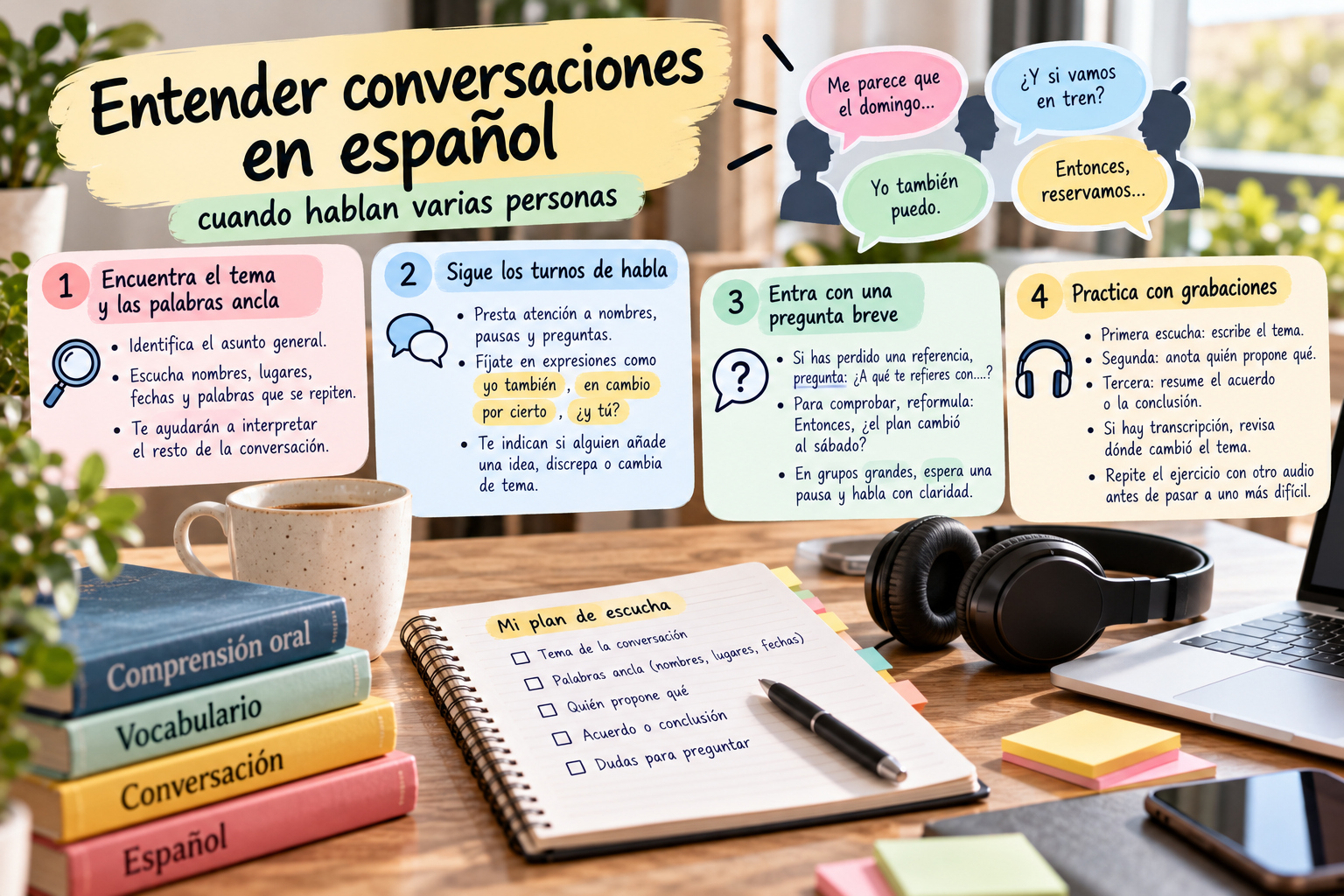
- First listen: play a one- or two-minute extract without pausing. Write down the subject and situation.
- Second listen: look for three specific details, such as a place, time, opinion or cause.
- Third listen: consult a transcript if available and mark which sounds or expressions caused you to miss information.
Choose short material you can replay. If a recording is too difficult, you do not need to struggle for longer: shorten the extract or choose a more familiar topic.
Learn to recognise groups of words
In natural speech, words run together and some syllables are less stressed. Save complete expressions such as què vols dir? (what do you mean?), no ho sé (I don’t know) or depèn del dia (it depends on the day). Repeat the entire phrase with the rhythm you hear; practising isolated sounds is less useful if you later cannot recognise the words when linked together.
Increase the difficulty gradually
Start with one clear voice and a familiar topic. Then change just one variable at a time: add a second voice, increase the speed or choose a new topic. If you introduce all the difficulties together, it will be harder to identify what you need to practise.
Check your progress
Once a week, listen again to an older extract before starting a new one. Summarise what you understood aloud in three sentences. Do not measure progress by the number of unknown words, but by whether you grasp the topic, details and speaker’s intention more clearly.
How to use a transcript effectively
Do not read the transcript before listening, as that would mainly train reading rather than listening. After the first listen, use it to locate a particular phrase you did not recognise. Replay the extract several times, then listen to the full recording again without the text. If possible, listen to a second person reading the same sentence. This connects the written form with different spoken versions without merely memorising a recording.
In class, you can request listening activities suited to your level and review difficulties with guidance. Explore our Catalan courses in Barcelona.