
Starting Catalan at A1 level means learning to manage very common interactions using simple sentences: introducing yourself, asking for basic information, talking about your routine and understanding short instructions. You do not need to master all the grammar before you begin having conversations. It is useful to build a foundation of expressions you can adapt to your own life.
A first map of objectives
- Say your name, where you are from, which languages you speak and what you do.
- Ask about places, opening hours, prices and directions.
- Talk about likes, family and regular activities.
- Understand numbers, dates and personal details when spoken slowly.
Use this list to select one specific objective each week and check what you can already do without reading.
Learn language chunks, not isolated word lists
Save phrases such as Em dic… (My name is…), Visc a… (I live in…), M’agrada… (I like…), Necessito… (I need…) and On és…? (Where is…?). Complete each structure with true information about yourself. Then change the subject or place to see which parts of the sentence change. This gives you material you can use in conversation from the very first level.
Make time for sounds
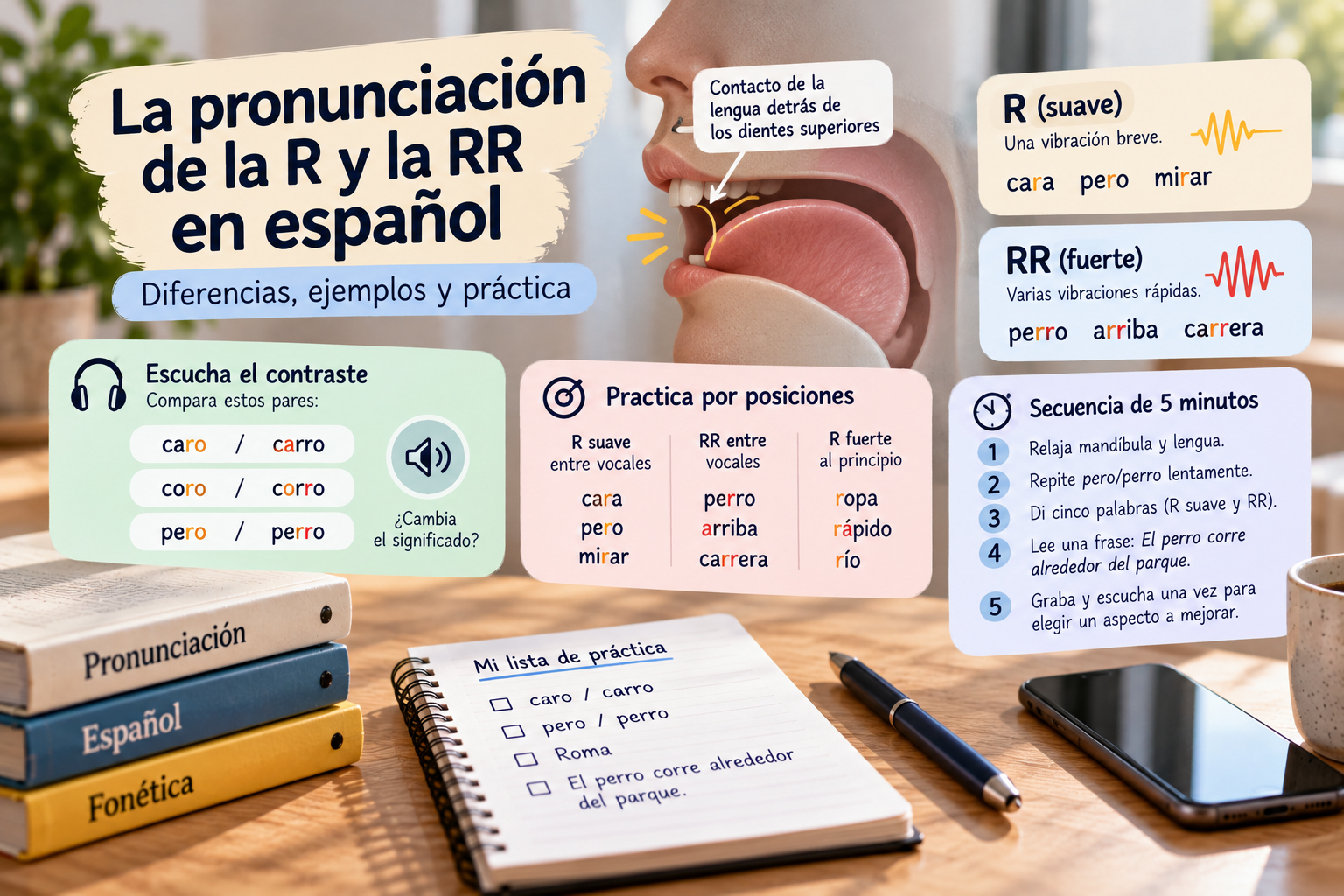
Listen to Catalan vowels and repeat short words after an audio model or your teacher. Record yourself saying a short phrase and compare rhythm and stress without expecting perfect pronunciation. Your first goal is to be understood by others.
A fifteen-minute routine
Spend five minutes reviewing earlier expressions, five minutes listening to something short and five minutes speaking aloud without reading. Once a week, prepare a two-minute dialogue: greet someone, ask a question and respond with your own information. If you get stuck, use helpful phrases such as M’ho pots repetir? (Can you repeat that?) or Com es diu… en català? (How do you say… in Catalan?).
Signs that an expression has really been learned
An expression is not learned merely because you can repeat it while looking at your notes. Check whether you can say it later, change one detail and understand a related reply. For example, practise On és la parada? (Where is the stop?) and then ask about a pharmacy or station. If you can adapt the structure, you have gained a useful communication tool; if you can only repeat a fixed sequence, review it with variations.
An introductory course organises the material and offers opportunities to practise with corrections. Discover our Catalan courses in Barcelona.