The meaning of quedar in Spanish depends greatly on the words around it. You can use it to arrange a meeting, talk about what remains, say where a place is or describe a result. Rather than looking for a single translation, notice the subject and the complement used with the verb.
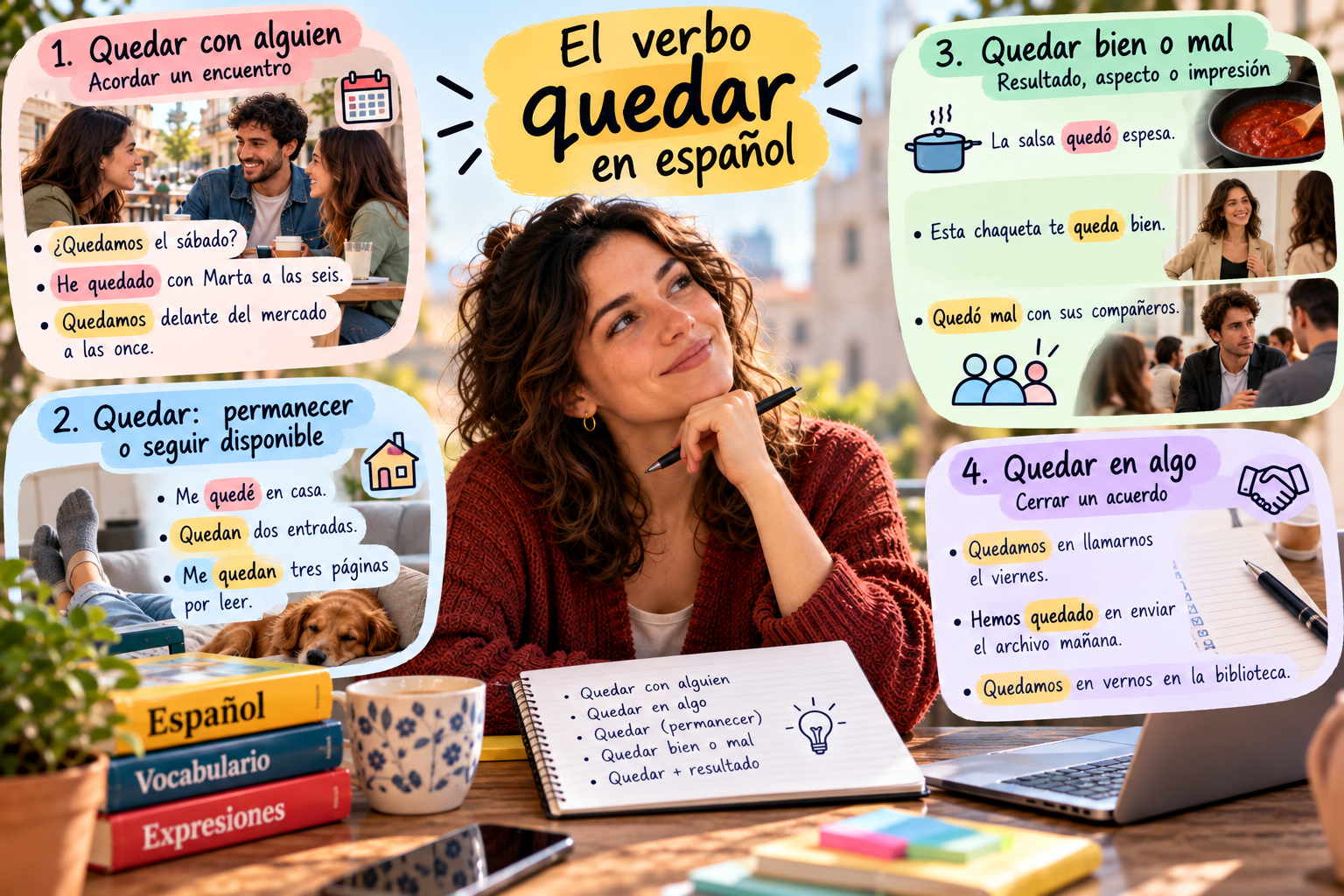
Quedar con alguien: arranging to meet someone
He quedado con Marta a las seis means I have arranged to meet Marta at six. To suggest a plan, say ¿Quedamos el sábado? (Shall we meet on Saturday?). You can add a place and time: Quedamos delante del mercado a las once (Let’s meet in front of the market at eleven). In this use, the person is normally introduced by con (with).
Quedar: remaining or still being available
Me quedé en casa means I stayed at home. Quedan dos entradas means two tickets are still available. Me quedan tres páginas por leer means I have three pages left to read. Notice how sentence structure changes the meaning and determines what acts as the subject.
Quedar bien o mal: result, appearance or impression
La salsa quedó espesa describes how the sauce turned out. Esta chaqueta te queda bien describes how a jacket fits or suits you. Quedó mal con sus compañeros may mean someone made a poor impression or failed to keep a commitment. The surrounding words offer different clues in each case.
Quedar en algo: reaching an agreement
Quedamos en llamarnos el viernes expresses an agreement to call each other on Friday. This construction is often followed by an infinitive. Practise it with real situations: who will call, when you will send a file or where you will meet.
Context exercise
Write four sentences with quedar: one with con, one about something left over, one describing a result and one expressing an agreement. Then cover your sentences and explain each situation without using the verb; this checks whether you have linked each use to its meaning.
Quedar and quedarse: pay attention to the pronoun
The pronoun can change the meaning: Quedamos con Ana a las seis means we arranged to meet Ana; Nos quedamos en casa means we stayed home. Also compare Queda comida (There is food left) with Me quedo con esta opción (I’ll choose this option). Write down the pronoun, preposition and subject alongside each example. These clues are often more useful than looking for a single translation of the verb.
Expand your vocabulary through conversation in our Spanish courses.