
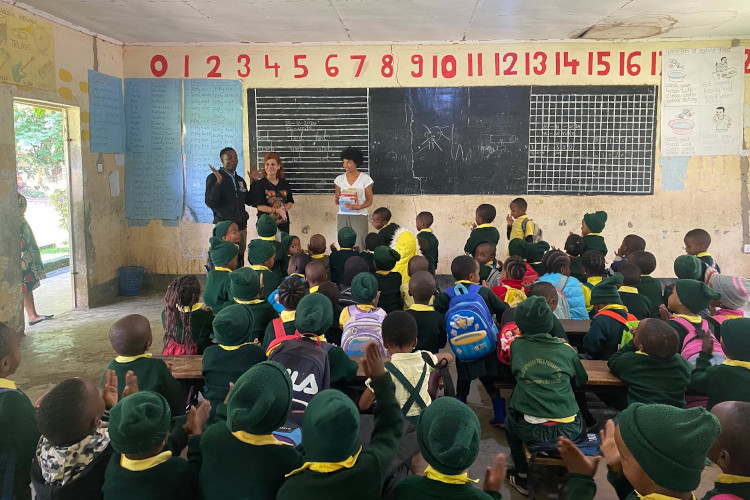
A personal journey to Tanzanian schools shows how books, education and learning languages create opportunities for children and young people.
An official certificate?
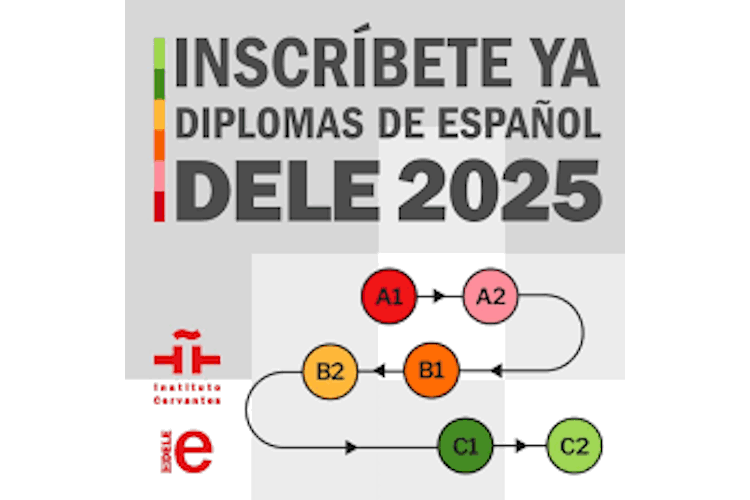
An official certificate is another asset to have throughout your professional career. Today, language skills are more valuable than ever on a professional CV. In today’s increasingly globalised world, speaking Spanish has become a competitive advantage in many fields. Spanish already has more than 500 million speakers, a total surpassed by Mandarin Chinese and English. Its presence in business, academia and diplomacy continues to grow. Official proof of proficiency in Spanish as a foreign language can help strengthen your professional profile and open up new career opportunities. (https://www.youtube.com/watch?v=Bd6KU2SDozs). Any official certification validates a candidate’s language skills and provides a recognised credential for educational institutions, multinational companies and international organisations. It can be particularly valuable in sectors such as: Business and international trade: Makes it easier to communicate with business partners and customers in Spanish-speaking markets. International relations and diplomacy: Can be required by embassies, multilateral organisations and NGOs. Education and teaching: Demonstrates the level needed to teach Spanish or work in bilingual institutions. Tourism and hospitality: Improves interactions with customers and competitiveness in a global industry. Healthcare and social services: Helps professionals support Spanish-speaking patients more effectively. Of course, the reasons do not have to be professional. Throughout my career, I have helped many people prepare for official Spanish qualifications for purely personal reasons. Reaching a strong level in another language is always a source of personal pride. The main internationally recognised Spanish qualifications are the DELE (https://examenes.cervantes.es/es/dele/que-es) and SIELE (https://siele.org/). The DELE (Diplomas in Spanish as a Foreign Language) is a prestigious qualification awarded by the Cervantes Institute. Its levels follow the Common European Framework of Reference for Languages (CEFR). It is ideal for people who want permanent proof of their Spanish level, since it has no expiry date. The SIELE (International Spanish Language Evaluation Service) assesses Spanish language ability for academic and professional contexts. Unlike the DELE, SIELE offers a flexible digital format and fast results. It is recognised by universities and companies worldwide and is particularly useful if you need to certify your level of Spanish quickly. If you are considering one of these exams, take a look at my DELE and SIELE preparation courses. I will guide you through every step so you can achieve the best possible result. Which option is best for you? Choosing between DELE and SIELE depends on your aims and needs. If you want a qualification that never expires for professional or academic purposes, DELE may be the best choice. If you need flexible, rapid proof of your Spanish level, SIELE may suit you better. Both assess reading, listening, writing and speaking, although their formats and the recognition they receive may vary by country or institution. If any of the following applies to you, I recommend considering preparation for an official exam: Increase your chances of finding work in international companies. Improve your profile in recruitment processes. Expand your career into Spanish-speaking markets (South America, Spain and the United States). Access higher education; many university programmes ask for Spanish language certification. Progress professionally. Fulfil a personal goal and discover new aspects of yourself through language learning. Preparing for an official examination is an investment in your future. If you are unsure which one to choose or how to start, get in touch. I am here to help you achieve your goal!

The value of multilingualism in business: Spanish and Catalan courses
Discover the benefits of personalised Spanish and Catalan group lessons for company communication, customer service and team development.

How personalised teaching can transform your Spanish and Catalan learning
See how tailored Spanish and Catalan lessons adapt to your interests, schedule, professional needs and preferred learning pace.

How long does it take to speak Spanish well? Where should I start?
Find out what influences your progress in Spanish or Catalan, how to define your personal goals and which learning format may suit you.

Discover some fascinating facts about Spain!
Discover everyday Spanish cultural habits, from restaurant times and social life to punctuality, humour and popular expressions.

Why learn Spanish?
Explore the professional, cultural and personal benefits of learning Spanish, from international opportunities to new perspectives.

Can you learn Spanish and Catalan with more than just books?
Discover how online articles and everyday digital reading can support personalised Spanish and Catalan language learning.

Why is reading in other languages important?
Learn how reading Spanish and Catalan improves grammar, spelling, vocabulary and comprehension, and how to choose suitable texts.

What can you do when someone doesn’t enjoy reading?
Not everyone enjoys reading. Explore other ways to practise Spanish and Catalan through podcasts, films, social media and tailored language lessons.